
Allergy Treatment Market Size Projected to Reach USD 37.54 Billion by 2032
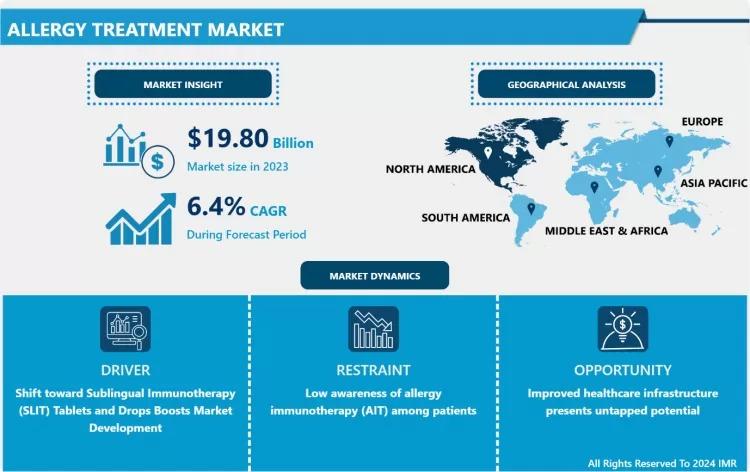
“According to a new report published by Introspective Market Research, Allergy Treatment Market by Type, Treatment, and Distribution Channel, The Global Allergy Treatment Market Size Was Valued at USD 22.76 Billion in 2025 and is Projected to Reach USD 37.54 Billion by 2032, Growing at a CAGR of 7.4%.”
The global Allergy Treatment Market encompasses a diverse range of pharmaceutical products and therapeutic interventions aimed at mitigating the symptoms, managing the severity, and modifying the underlying immune response to allergic conditions. Key product segments include anti-allergy drugs, such as antihistamines, corticosteroids, and decongestants, used primarily for acute symptom relief, and advanced disease-modifying therapies, such notably Allergen Immunotherapy (AIT) and biologics (e.g., anti-IgE antibodies).
These treatments offer significant benefits over simply avoiding allergens, by either rapidly alleviating debilitating symptoms (like allergic rhinitis and asthma) or, in the case of AIT, providing long-term tolerance and preventing disease progression. The main uses are in treating highly prevalent respiratory allergies (rhinitis, asthma), dermatological allergies, and increasingly, severe food allergies. The market is continuously evolving with the introduction of novel, targeted biologic drugs for complex, severe, and chronic cases.
Market Segmentation:
The Allergy Treatment Market is segmented into Type, Treatment, and Distribution Channel. By Type, the market is categorized into Eye Allergy, Asthma, Rhinitis, Skin Allergy, and Food Allergies. By Treatment, the market is categorized into Anti-Allergy Drugs and Immunotherapy. By Distribution Channel, the market is categorized into Hospital Pharmacies, Retail Pharmacies, and Online Pharmacies.
Growth Driver:
The Rising Global Prevalence of Allergic Conditions Driven by Environmental and Lifestyle Changes: The core driver of market expansion is the continuous, rapid increase in the global incidence of allergic disorders, including allergic rhinitis and asthma. This surge is largely attributed to factors such as increasing air pollution, rising urbanization, and changes in diet and hygiene practices, collectively known as the "hygiene hypothesis." This elevated disease burden necessitates persistent and recurring treatment—from over-the-counter drugs for seasonal symptoms to complex biologics for chronic asthma—creating a sustained high demand.
Market Opportunity:
Advancements in Immunotherapy and Personalized Medicine, Especially for Food Allergies: A major opportunity lies in the shift toward disease-modifying treatments, particularly innovative Allergen Immunotherapy (AIT) and next-generation biologics. Oral Immunotherapy (OIT) for food allergies, such as peanut allergy, is rapidly moving from clinical trials to commercialization, providing a curative rather than symptomatic approach. Furthermore, personalized medicine, which uses molecular diagnostics to tailor immunotherapy regimens to individual patient profiles, promises to enhance efficacy and compliance, driving premium-segment growth.
Detailed Segmentation:
Allergy Treatment Market, Segmentation The Allergy Treatment Market is segmented on the basis of Type, Treatment, and Distribution Channel.
Type The Type segment is further classified into Eye Allergy, Asthma, Rhinitis, Skin Allergy, and Food Allergies. Among these, the Asthma sub-segment accounted for the highest market share in 2025, estimated at 32.2%. The dominance of the asthma segment is due to its high global prevalence, the chronic nature of the disease (often allergic in origin), and the requirement for continuous, high-value maintenance therapies, including inhaled corticosteroids and, for severe cases, expensive biologic injectables.
Treatment The Treatment segment is further classified into Anti-Allergy Drugs and Immunotherapy. Among these, the Anti-Allergy Drugs sub-segment accounted for the highest market share in 2024, holding a share of 71.4%. This segment's leading position is maintained because drugs like antihistamines and nasal corticosteroids are the first-line treatment for the vast majority of allergy sufferers globally, offering easy accessibility, cost-effectiveness, and suitability for both acute and mild-to-moderate allergy symptom management.
Some of The Leading/Active Market Players Are-
- Johnson & Johnson Private Limited (USA)
- GlaxoSmithKline plc (UK)
- Novartis AG (Switzerland)
- Sanofi S.A. (France)
- Pfizer Inc. (USA)
- Merck & Co., Inc. (USA)
- Teva Pharmaceutical Industries Ltd. (Israel)
- AstraZeneca Plc (UK)
- ALK-Abelló A/S (Denmark)
- Stallergenes Greer (UK)
- DBV Technologies S.A. (France)
- Bausch Health Companies Inc. (Canada)
- and other active players.
Key Industry Developments
News 1: In January 2024, Intrommune Therapeutics and Inimmune Corporation announced a collaboration to advance a rapid, long-acting oral mucosal immunotherapy for allergies. This collaboration is focused on speeding up the development of needle-free, long-term immunotherapy solutions, leveraging novel drug delivery methods to enhance patient convenience and compliance, particularly for common respiratory allergies.
News 2: In July 2024, Stallergenes Greer received U.S. FDA approval for Palforzia (Peanut Allergen Powder) for treating peanut allergy in toddlers aged 1-3 years. This expansion of approval for the first oral immunotherapy treatment to a younger pediatric population addresses a high-risk group and strengthens the shift toward active, disease-modifying treatments for severe food allergies.
Key Findings of the Study
- Asthma treatment holds the largest revenue share by type, driven by the chronic nature of the disease and high-value biologics.
- North America dominates the regional market with a 38.5% share in 2024, due to high expenditure and advanced treatment availability.
- Key growth drivers include the rising incidence of allergies and the advancement of immunotherapy solutions.
- A key market trend is the increasing use of biologics and sublingual immunotherapy (SLIT) for disease modification.
[CTA: Request a complimentary sample report and detailed segment analysis]
About Us
At Introspective Market Research Private Limited, we are a forward-thinking research consulting firm committed to driving growth in the Allergy Treatment Market. With deep insights, strategic solutions, and holistic research, we empower businesses to achieve success and dominance in the global Pharmaceuticals and Biotechnology industry.
📞 Contact Us
Introspective Market Research Pvt. Ltd.
Phone: +91-91753-37569
Email: sales@introspectivemarketresearch.com
Web: www.introspectivemarketresearch.com

 English
 Arabic
 French
 Spanish
 Portuguese
 Turkish
 Dutch
Dutch
 Italiano
 Russian
 Romaian
 Portuguese (Brazil)
 Greek
Greek
